Thursday, April 13, 2023

Bustles, 1870s

Still working my way through the railroad event costumes. My own character was from 1873, so among my other accoutrements, I needed to make a bustle. I wanted something distinct enough to say '1870s bustle period' but also small enough to be practical under a simple cotton dress (without a train).

So, I thought it was meet to check out the options.

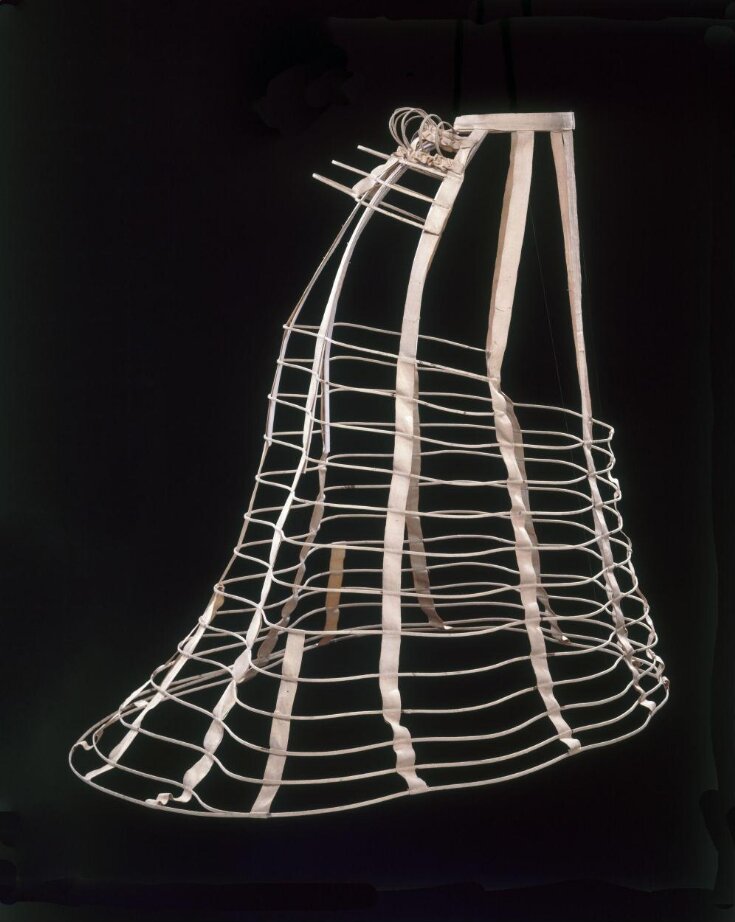
We have some lovely transitional hoops which have that bustle shape at the top back, like so:

Bustle cage from LACMA c.1862-1870.
A little early for my purposes

The V&A has several lovely examples of this style in various shapes. If I needed evening wear, I'd probably try for something like this (or else a covered version like these):

"Princess Louise Jupon" 1871, VAM.
 

Fortunately, there are also a plethora of shorter bustle options in various materials:

Evolved skeleton skirt. Bustle, c.1872-4. MET.


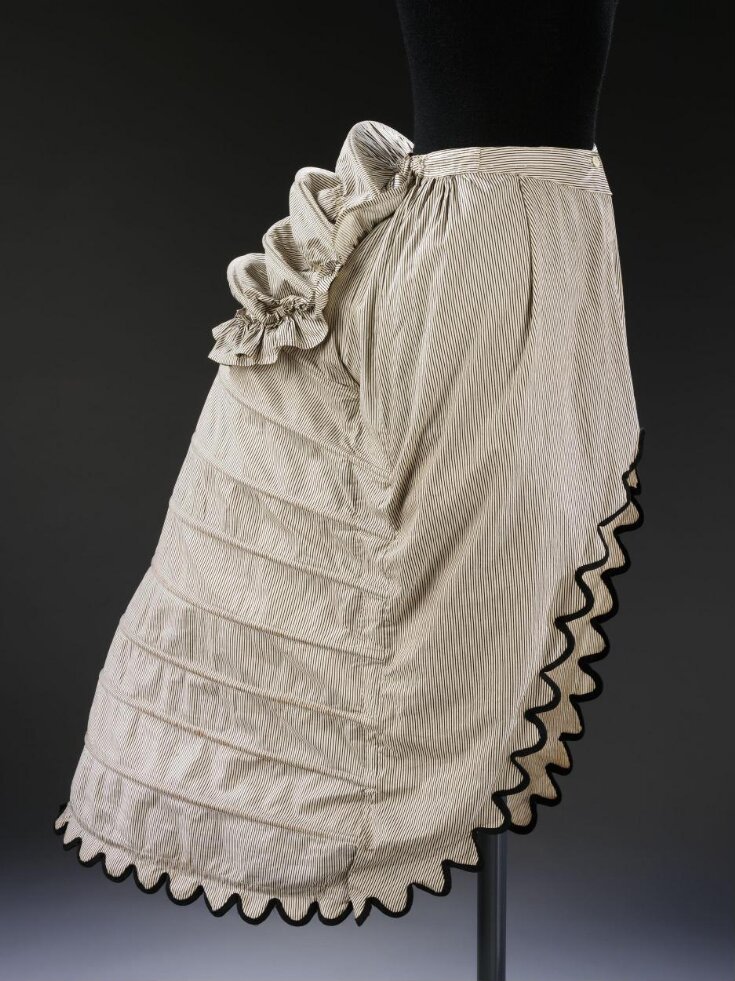
Fabric and steel "crinolette", c.1870. VAM. A similar one from LACMA.

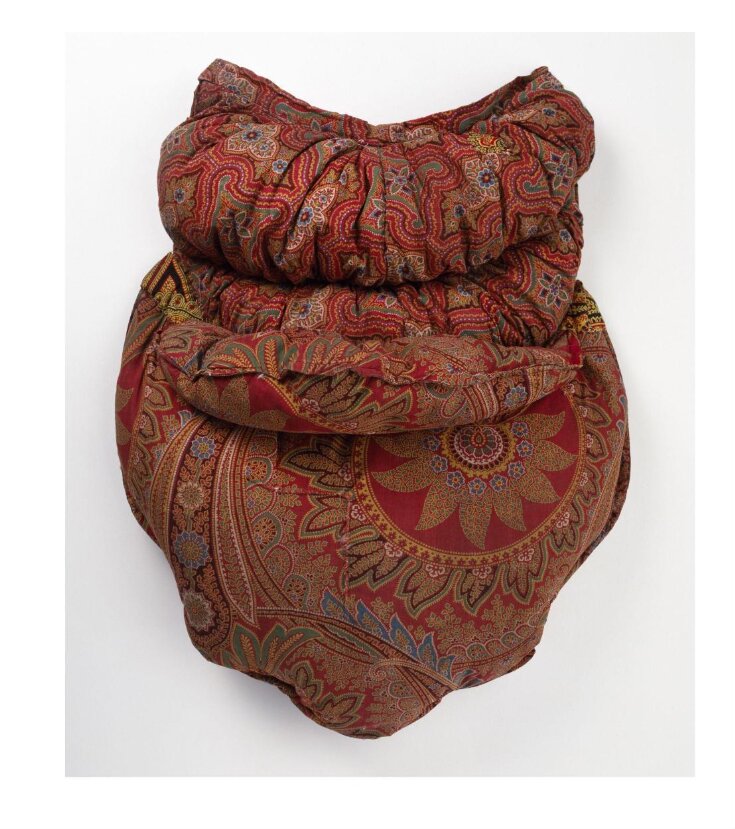
Down-filled bustle pad, c.1875. VAM. [Another.]


Not sure about the shaping, but this one would be easy to make.
Bustle, 1870-5. LACMA.

But I think my favorite might be the horsehair pads. They come in several variations with ruffles and puffs, and combinations thereof:

The winner. Bustle, c.1875. LACMA.


Demorest's Monthly Magazine also shows several varieties of horsehair bustles in July 1875, including a long version worn under a trained gown, and three of the shorter ones.

Short horsehair bustle #2.


Wednesday, April 12, 2023

HFF 6.5: Faux Food

Detail from an 1850s painting with a woman's hands gesturing over a table of food.

The Challenge: Faux Foods. Try a recipe or use an ingredient that imitates, replaces, or tastes/looks like a different food. 

The Recipe: I wanted to try a "mock gooseberry fool" alias "spring cream" alias "rhubarb fools", but there was to be had so early in the season in this clime (no, not even in the frozen section of the grocery store). Next time. 
 
Instead, at the last minute, I substituted jumbles from Eliza Leslie's Sevety-Five Receipts for Pastry, Cakes, and Sweetmeats. I selected this recipe, intending to use the suggested substitution of lemon essence for rosewater, only to find myself out of lemon essence and substituting lemon rind for the substitute lemon essence. 

JUMBLES.Three eggs. Half a pound of flour, sifted. Half a pound of butter. Half a pound of powdered loaf sugar. A table spoonful of rose water. A nutmeg, grated. A tea spoonful of mixed mace and cinnamon. 
Stir the sugar and butter to a cream. Beat the eggs very light. Throw them all at once into the pan of flour. Put in at once the butter and sugar, and then add the spice and rose water. If you have no rose water, substitute six or seven drops of strong essence of lemon, or more if the essence is weak. Stir the whole very hard with a knife. Spread some flour on your paste board and flour your hands well. Take up with your knife a portion of the dough and lay it on the board. Roll it lightly with your hands into long thin rolls, which must be cut into equal lengths, curled up into rings, and laid gently into an iron or tin pan, buttered, not too close to each other, as they spread in baking. Bake them in a quick oven about five minutes, and grate loaf sugar over them when cool.


The Date/Year and Region: 1830, Boston

How Did You Make It: In the period kitchen, which is usually fun and always an adventure. I started by creaming the butter and sugar (half pound of each, the sugar measured on the beam balance), which on this cold damp day meant 'beating the hard butter and sugar with a wooden spoon until they incorporated'. I then beat the three eggs (yokes and whites) with a birch whisk in a tapered redware bowl. I then combined all three, adding a half "teaspoon" each of powdered mace and cinnamon, and grating about 1/3 of a nutmeg (because I've been having trouble sourcing them and was running low). I grated the lemon (basically zesting it) with a replica tin rasp, and added it as well.
 
This made a really thin, sticky dough (perilously close to a batter). The first four jumbles, I tried rolling them in flour to make rings, but they just weren't looking nice. At my friend's suggestion, I then tried piping the rest of the dough (which made lovely rings on the tin, at least). I baked them in a slower-than-desired oven (cast iron wood-burning stove), on a replica tin baking sheet, which was buttered per the instructions.
 
The jumbles spread out paper-thin while baking. Though they tasted fine, they did not look well at all.  

Time to Complete: Unsure, as I was in the period kitchen without a clock. Less than 3 hours, if only because I know I spent more than an hour fighting the stove before any cooking started.

Total Cost: $1 for lemon, other ingredients on hand

How Successful Was It?: Tasted fine, but the texture was a mess. The lemon worked well with the spices, and none were overwhelming. Our verdict after the first pan was that more flour was needed, but we were so short on time that I just decided to bake what we had left (and still ended up throwing out the last pan worth of batter, because there just wasn't time). I'd like to revisit this recipe with more flour at some point in the future--I think that I need to really work a lot more flour in during the rolling step.

How Accurate Is It?: There were lots of little details here which got me closer to 'accurate' than usual. I used eggs from a friend's heritage-breed chickens (closer to the right size), a beam balance (for weighing ingredients), tried the divided spoon method to measure the spices, got to grate my substitute lemon rind on a reproduction tin grater (which works REALLY WELL), baked the jumbles on a reproduction tin cookie sheet, and did all of this in a (freezing cold) period kitchen with a wood-burning stove.


Jumbles. Very flat jumbles. Edible, though.

Tuesday, April 11, 2023

Book Review: Tudor Children


Cover for Tudor Children by Nicholas Orme

Medieval Children by Nicholas Orme is one of my favorite resource, so I was very excited to hear that he had a new book taking that research into the 16th century.

Like its predecessor, Tudor Children uses literary, documentary, and artistic sources to explore the lives and experiences of children in England during the Tudor Period (c.1485-1603). As Orme observes, few records made by children survive to reveal their lived experiences. Instead, small details must be drawn out of schoolbooks, memorial brasses, manuscript illuminations, popular plays, religious tracts, and occasionally court cases.

The eight chapters of this book (230 pages) are divided thematically into subjects such as religion, education, and recreation. The arrangement is also roughly chronological, beginning with birth/infancy, and ending with a chapter on adolescence. Although religion has its own chapter--dealing with baptism, religious instruction, and evidence for/against children's participation in church services--it also forms a frequent demarcation throughout the book. Every chapter includes some mention of the changes between pre-reformation and post-reformation England, whether in the ceremonies surrounding a birth, or in the reduced number of children's choirs in England after 1549.

A lot of the pre-1549 material is similar to Medieval Children, which makes sense, though it did give me a bit of deja vu. There is some very interesting historiographic discussion of how 16th century sources differ from earlier ones, including the effect of humanist education practices on surviving schoolboy writings. The book is also lavishly adorned with full-color images taken from contemporary art, such as that shown on the cover.

I do have one quibble with the research: on page 43-44, discussing children's clothing, the author states that drawers were worn, and elsewhere that their presence "can be assumed." This remark accompanies quotations listing the clothing provided for specific 16th century children, with drawers not included in the lists. I'm not sure where this came from; the main source cited for the topic of clothing, Anne Buck's Children's Costume in England, doesn't mention drawers before the late 17th century or braies after the 14th. It's a minor issue, but I don't like unsupported assertions of fact.

Despite that one point, I found this book enjoyable and informative, with sufficient citations and extensive quotations from period sources. The writing style is very readable by academic standards, though a step or two more formal than most popular history books.


Score: 5 stars.

Accuracy: High. Many period sources are quoted, and the book uses full academic citations with end notes. My one complaint in regards rigor is detailed above.

Strongest Impression: A solid overview of many aspects of daily-life, based on reputable primary sources. I'd highly recommend this volume for anyone interpreting the 16th or early 17th centuries, since we all were children at one point.

Monday, April 10, 2023

Cotton Print Dress, c.1895

Another for the railroad event. I fear the picture doesn't do justice to its amazing puffed sleeves. I like to think Anne Shirley would approve.


Cotton print dress with yoked bodice.


For this dress, we were trying to outfit a female telegrapher of c.1895. The goal was a washable, practical garment for a working woman, while remaining identifiably 1890s. 

I draped the bodice and sleeve, using a narrow coat sleeve as the base, and more-or-less adapting my 1850s methods to the diagrams given in Bertha Banner's 1898 Household Sewing with Home Dress Making. The sleeve puff is copied from an 1890s dress in Janet Arnold's Patterns of Fashion 2, though without the paper interlining which made the original nigh-spherical. The skirt was cut following instructions for goring skirts from Jeanette Davis's The Elements of Modern Dressmaking (1896) in conjunction with the description of a print "housemaid skirt" from Banner. The dress is worn over the corset previously mentioned, and a gored petticoat, which I neglected to photograph. The petticoat is cut along the same lines as the dress skirt.

Sunday, April 9, 2023

1578 Plague Book

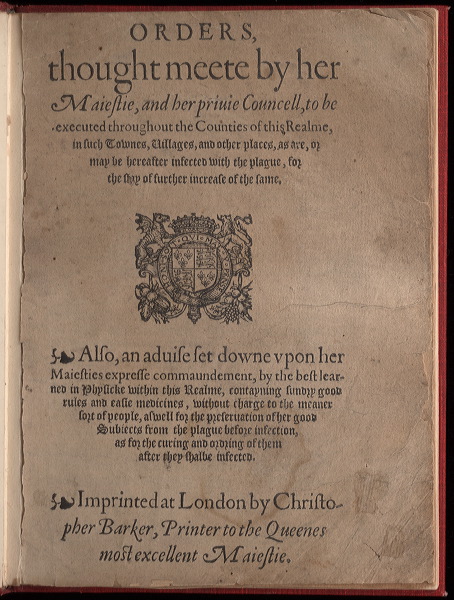
Found this in my bookmarks, with the ominous date of 2020, and thought it would be fun to share: instructions from Elizabeth I's government about controlling the spread of Plague. This book, in the library of the University of Virginia, is currently thought to have been printed in 1578 or 1579.

  
Title page from the Plague Book, c.1578.

I may need to think of a way to work this into street bit for Faire...

Saturday, April 8, 2023

Corset, c.1895

Another for the railroad living history event. I needed to outfit our telegrapher for the 1890s. Unfortunately, my own corset for this approximate time was 1) barely started, and 2) going to be just a bit small for the lady in question. Instead, I ended up scaling up my custom pattern, and then fitting it to the volunteer. She found it comfortable, and I found it easy to drape a toile over, so I'm calling this a win-win situation.


The corset is from a double-layer of coutil, which I sourced from Renaissance Fabrics. The busk and 1/4" steel boning (and pair of spiral bones for the front curve) were purchased at Wawak. The grommets are from the two gross I purchased at my favorite neighborhood hardware store many years ago (RIP Hardwicks). Self-fabric binding.

Saturday, April 1, 2023

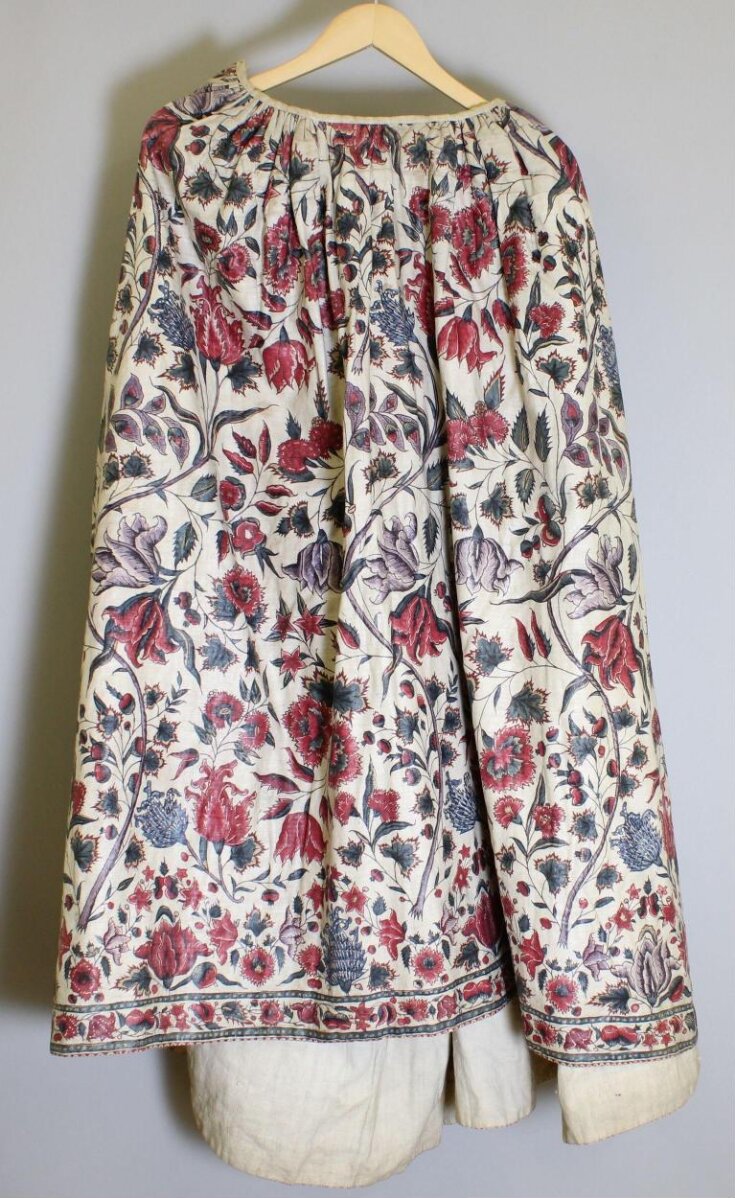
Original: 17th Century Printed Petticoat

 Dutch petticoat from the second quarter of the 18th century; the fabric is a printed cotton made in India.


Petticoat, c.1725-49, VAM.

While there's unfortunately only the one photograph, the magnified view is excellent: you can see every detail of the intricate four-color floral pattern. The fabric is described as glazed, and from the image, the petticoat appears to be faced in a plain white (possibly also glazed) fabric, with a narrow tape waistband.