Monday, June 5, 2023

H.F.F. 6.7: T Time


Detail from an 1850s painting with a woman's hands gesturing over a table of food.


The Challenge: T Time. Make a dish suited to tea time. Or tee time. All foods that make terrible "t" puns are in play.
 

The Recipe: Extra Soda Biscuits from Breakfast, Dinner, and Tea Viewed Classically, Poetically, and Practically, under the "Tea Biscuits and Cakes" heading.
Extra Soda Biscuits--Another rule for soda biscuits is as follows: To one quart of flour add five teaspoonsful of cream of tartar, two of soda, a little salt, and a piece of butter the size of an egg. Sift both cream of tartar and soda with the flour, rub the butter in well, and mix with sufficient sweet milk to make a soft dough. Roll it out and cut it into cakes about an inch thick, bake in a quick oven and they will puff up to twice their original size.
 
The Date/Year and Region: 1860, New York

How Did You Make It: Half-scale (which made 7 biscuits, and served 4 for tea). I started with 2 cups of flour, to which I added the 2.5 tsp cream of tartar, 1 tsp baking soda, and 1/2 tsp salt. After mixing the dry ingredients, I cut in the butter (estimated half the size of an egg, no idea the actual measure), then added 2% milk until the flour was all worked in. I then rolled out the dough on a floured counter, cut out the biscuits, and baked them at 400F for about 15 minutes.
 
Time to Complete: <30 minutes including baking time.

Total Cost: Ingredients on hand.

How Successful Was It?: I thought the biscuits tasted fine and had a reasonable crumb, though they didn't fully double in height. One of my companions found the texture a bit tough, and advised handling the dough more delicately (which I will endeavor to do).

How Accurate Is It?: Fairly. I used a modern kitchen, but didn't substitute any of the ingredients. The salt quantity and baking time/temperature were guesses based on the instructions, which appear to have worked out. I did get to serve them in an 1857 building, which was lovely.


Extra Soda Biscuits.

Friday, June 2, 2023

More Early Modern (& Medieval) References Online

It's faire season again. Last year I compiled some of my favorite easy-to-read books for refreshing on early modern social history and interpretation. This year, it's blogs and electronic references. These include primary (or at least photographs of actual artifacts), secondary, and tertiary sources which I believe be reliable. 


Blogs & Reference Sheets

The Internet Medieval Sourcebook and Internet Modern Sourcebook are the Holy Grail of searchable digitized original texts.

In addition to handwriting references, the National Archives' palaeography page also has handy references lists of county abbreviations, non-decimal currency units, term for land measurement, how Roman numerals were used in early modern English texts, and calendar peculiarities.

A Compendium of Common Knowledge contains introductory information on a wide variety of topics related to daily life in England c.1558-1603, from where to buy different goods in London to lists of the ranking peers.

Dr. Brett Devereaux's blog has (fully cited) essays on the logistics of military campaigns in the ancient through early modern period, as well as other topics relevant to pre-modern economics and warfare (like an overview of bread production). Note that this blog covers a wider time period that just the early modern, and that a number of its essays are focused on how fantasy media does or does not portray the historic systems it is nominally based on (which is great if you like overthinking LotR or GoT in addition to pre-modern history).

 Dr. Eleanor Janega's Going Medieval blog also has fully-cited, highly conversational essays on a variety of subjects, particularly those related to sex and death in medieval Europe.

Medievalists.net functions as a news site for medieval research: it announces new books, has essays on various topics, writes up current news related to medieval topics, and even has funny listicles (medieval swear words, anyone?).


Salt, c.1515-1530, Amgueddfa Cymru/National Museum Wales


Museum Collections

Portable Antiquities Scheme. Index of archeological finds in the UK. Lots of little metal items such as brooches. The UI is a little old-fashioned, but the search filtering is a delight.

Amgueddfa Cymru (National Museum Wales). The collection search doesn't include a filter by date range, but a search for "post medieval" turns up all sorts of metal and ceramic pieces, including the lovely Tudor lady salt dish above. Also lots of arrow heads...

Scottish National Museum. Also no date-filter on the collection search, but there are many cool items, such as medieval leather shoes and 17th century candle lanterns.

Museum of London has a lot of interesting artifacts found in the city. I especially like the medieval purse frames recovered from the Thames.

UK National Trust. Online collection database for historic sites across the UK. Mostly modern period, but there are some earlier pieces.

Victoria and Albert Museum. Focused on art and design, the museum's pre-1600 collection includes decorated ceramics, ecclesiastical items, and more textile fragments than one might expect.

National Gallery Tudor and Jacobean Portraits Database. Includes most of the early modern English portraits you've heard of. There's also some interesting essays on art history and conservation.

British Library Manuscript Viewer. Original manuscripts: useful for content, writing voice, letter shapes, and all kinds of illustrations. See also the British Library Digital Catalog of Illuminated Manuscripts for an illustration-search.

British Museum. Does have some items from Britain. Browsing the "medieval" and "post-medieval" period tags reveals pottery, glass, and metal artifacts.

Royal Armouries Collection. Not my usual, but if you're looking for early modern English arms and armor, this is the place.

Rotterdam Archeology has some very complete medieval metal and ceramic items (badges, sheers, pots) and even textiles. Amsterdam: Below The Surface likewise has a wide variety of items from pre-history to the 21st century. 


Geese from the Luttrell Psalter, British Library

Transcriptions of Tudor Charters, Accounts, Letters, etc.

Materials for a History of the Reign of Henry VII vol 1 & Materials for a History of Henry VII vol 2

Privy Purse Expenses of Elizabeth of York.

Accounts of the Lord High Treasurer of Scotland: A.D. 1506-1507 

Extracts from the Accounts of the Revels at Court, in the Reigns of Queen Elizabeth and King James I

The Progresses and Public Processions of Queen Elizabeth

The Girlhood of Queen Elizabeth: A Narrative in Contemporary Letters 

Queen Elizabeth and Her Times: A Series of Original Letters (vol 2)

Different, but related to period literature: JSTOR Understanding Shakespeare database.

Thursday, June 1, 2023

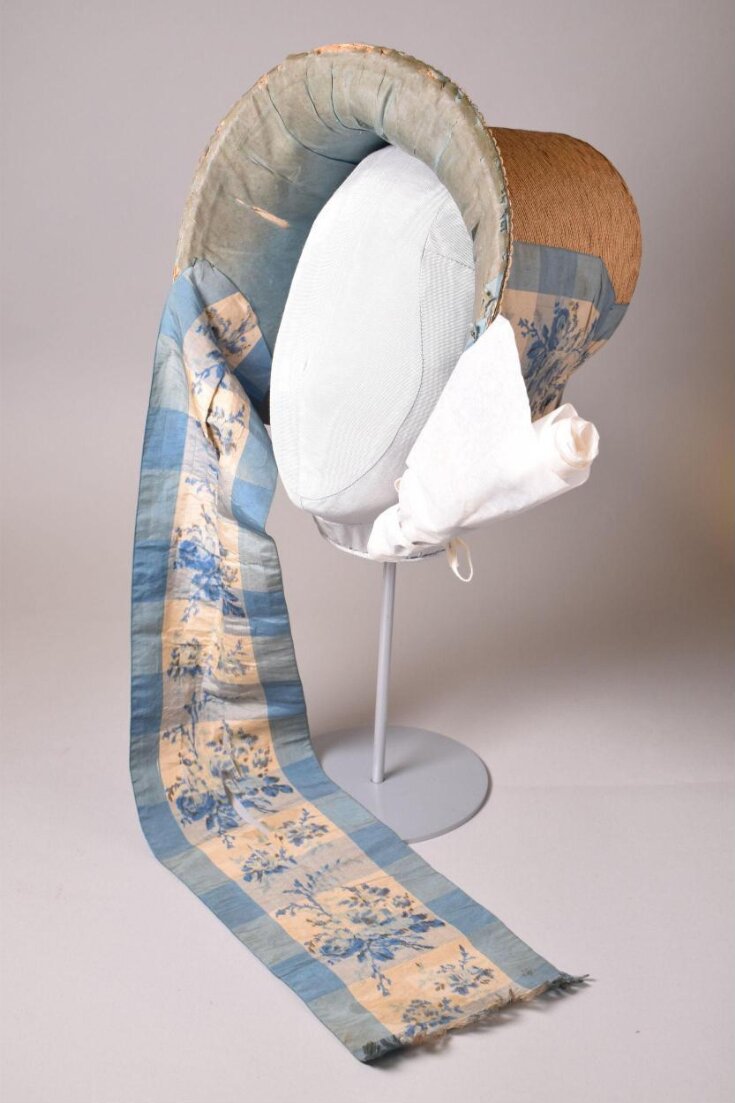
Original: Straw Bonnet, 19th century

Straw Bonnet, 19th century, VAM.
 

I selected this straw bonnet for the lovely figured ribbon. I wish they had more photographs to I could see the brim construction and neck edge better...

Wednesday, May 31, 2023

May Mending

This month's non-project sewing mostly involved altering bridesmaids' gowns, but I did finally put the last few stitches into my corded petticoat remake. Which was a good idea, since it's getting way too warm for the quilted one.

Also switched the buttons to ties on the new waistbands.

I started this petticoat with the intention to set it in stroked gathers (replacing the earlier gauging), but as it turns out I still hate sewing stroked gathers, so they became regular gathers after the first 4 inches. Gauging is easy, but something about lining up the waistband crease with the stroked gathers, and stitching into a poorly-defined sewing line just sets my teeth on edge. I cut a new waistband, and replaced the button and button holes with cotton tape ties.  I really like how they've functioned on my quilted petticoat and plaid petticoat, so I'm hopeful that these ties will also solve some minor annoyances I've had with buttons on undergarments before (wearing out the button-holes, compensating for size fluctuations, breaking buttons in the laundry). Admittedly, most of those incidents involved drawers.

Tuesday, May 30, 2023

Soft Crown Straw Bonnet, 1858

From Frank Leslie's New Family Magazine, October 1858:

WILDE'S HAT--This pretty hat is in a style which is just now very fashionable; the groundwork is of fine white Belgian straw surrounded with a border of plaid velvet with a cap crown also of plaid velvet separated into puffings by narrow bands of velvet edged with lace. Encircling the crown is a row of rich Chantilly lace, which nearly covers the straw front, the points just touching the velvet border. Very wide strings barred with velvet, side ruche and bandeaus of small mixed blossoms completes this handsome October bonnet. 


Plaid silk velvet not being an option, I decided to use a silk tafetta for the crown, binding, and ties. I also changed the color palette to be more spring-like, with white lace and white velvet ribbon. The front flowers are not visible, so I chose to use a mixture of blue cornflowers and violets for the "bandeau of small mixed blossoms." I omitted the lace from the edges of velvet ribbon because I couldn't get the scale to look right. The picture seems to suggest a sort of double-layer curtain, but as this is not confirmed in the description, I decided to keep it a simple single layer.


Back view.

The pattern is based off of one of the Timely Tresses round '50s bonnets (possibly the smaller cutting line on the Ada Gay). The brim is machine sewn from hemp braid. The rest of the bonnet is hand-sewn. The ties are narrow-hemmed strips of the same taffeta used for the crown, binding, facing, and bavolet, with both curtain and crown lined in cotton net for extra body; I believe this fabric came from Portland's Fabric Depot. The lace overlay and frill are both cotton levers lace from Fine French Laces.

From the front. The flowers aren't so dark as they appear.


Monday, May 29, 2023

Tablet Woven Band

Inspired by this video, I decided to break out the tablets and actually attempt a polychrome pattern. The design is a 8th-10th century eastern European pattern, which Lady Elewys conveniently wrote-up. In addition to the simple warp pattern (solid borders, are other cards the same, alternating S/Z), the appeal of this project was that all the tablets are moved together, and the same direction. When the warps get too twisted, you just start working the other direction until they're too twisted the other way. This was perfect for me, since I wanted an easy project that I could take to a Ren Faire, and work on amid interruptions, without need for notes.  


Band loom all warped up with 10 tablets.

I managed to finish the piece over one weekend, interspersed with spinning and netting and amusing children (who apparently love helping turn the cards).


Weirdly enough, the crewel yarn held up.

The single-strand crewel held up just fine as warp. It's a bit less tightly spun than I would have liked, but that's what I had on hand which came in multiple colors, was wool, and was the right size. I have ordered some 2/20 silk for next time.

Finished(?) band.

I had a thought of making this piece into garters, since my last pair ended up with the second band a hair too short to comfortably knot. To make sure there was plenty of warp of adequate garters, fringe, and the loom waste, I cut 3 yard warps. Exclusive of fringe, this gave me a 96" long piece of tape, so...that was successful. Now I just need to decide whether to cut and fringe two garters out of it (and a bit of left over), or have a really impressively long belt.


Wednesday, May 24, 2023

Medieval Drawstring Pouch

Continuing the catch-up posts, last spring I made some fingerloop braids at the Two Rivers Faire, with the intention of making a round purse based on some of the archeological examples from Amsterdam:

  • Leather purse (c.1300-1700), 11" diameter, 64 punched holes (~1/2" for a hole plus its adjoining space, punch size probably ~1/8 inch with 3/8 gap judging by how large the punched holes appear relative to the space between)
  • Another, 5.6" diameter, ~48 holes (~3/8" for hole plus space, holes probably ~1/8")
  • And a third, 12.5" diameter, ~72-74 holes (~just over 1/2" per hole, hole size nearing 1/4")

Of course, since embarking on this endeavor, the database has been updated to indicate that the ties were likely leather. Despite the simple design, my leather-punching skills proved inadequate, and I ended up letting this simple item linger in the To Do pile all winter. It's just a 9.5" leather circle, with 40 holes punched around the perimeter, and the striped fingerloop braid threaded through.

The pouch, open almost flat.

Closed pouch. Holds my replica coins and dice very well.