Not a garment, but this month's original item for inspiration does depict clothing (mostly peasant clothing, even!), which is what I'm looking for as I prepare to replace my 16th century kit.
| Book of Hours by Simon Bening, 1530-5, The Met. |
Not a garment, but this month's original item for inspiration does depict clothing (mostly peasant clothing, even!), which is what I'm looking for as I prepare to replace my 16th century kit.
| Book of Hours by Simon Bening, 1530-5, The Met. |
Very little mending got done this month, what with all the 1909 sewing I had (and still need to post). I did manage to sort through my stockings and pull out all the ones that need repair or replacing--which I'll count as the first step towards mending them.
 |
| All sorted. |
Silk Stockings: 1 pair in perfect shape, 1 needing major repairs for runs
Wool Stockings: 3 pairs, all ready to wear
Linen Hose: 1 pair ready to wear, 1 pair needing slight seam repairs
Cotton Hose: None wearable. Fabric on hand to cut new hose; truly dire items have been removed. Twelve pairs in various states of disrepair available for patching or being patched (most badly worn at the heel and toes).

The Challenge: Centerpiece. Make a dish that's meant to impress or be
the focal point of a meal. Time to experiment with plating and
presentation!
 |
| Dish with paper tampion. |
 |
| Never doing this with a scalloped dish again. |
 |
| Getting the moss to a uniform height actually ends up being really important. |
 |
| I ran out, so the leaves mostly just went around the edges. |

The Challenge: Odd Fellows. Make a dish that combines ingredients or flavors you wouldn't normally use in modern life.
Take Chykenns and scald hem. take parsel and sawge withoute eny oþere erbes. take garlec an grapes and stoppe the Chikenns ful and seeþ hem in gode broth. so þat þey may esely be boyled þerinne. messe hem an cast þerto powdour dowce.
 |
| First time sewing a chicken. |
 |
| In the pot. Note the sage and parsley which probably should be inside the chicken. |
 |
| Dinner is served. |
The Challenge: T Time. Make a dish suited to tea time. Or tee time. All foods that make terrible "t" puns are in play.
Extra Soda Biscuits--Another rule for soda biscuits is as follows: To one quart of flour add five teaspoonsful of cream of tartar, two of soda, a little salt, and a piece of butter the size of an egg. Sift both cream of tartar and soda with the flour, rub the butter in well, and mix with sufficient sweet milk to make a soft dough. Roll it out and cut it into cakes about an inch thick, bake in a quick oven and they will puff up to twice their original size.
 |
| Extra Soda Biscuits. |
It's faire season again. Last year I compiled some of my favorite easy-to-read books for refreshing on early modern social history and interpretation. This year, it's blogs and electronic references. These include primary (or at least photographs of actual artifacts), secondary, and tertiary sources which I believe be reliable.
Blogs & Reference Sheets
The Internet Medieval Sourcebook and Internet Modern Sourcebook are the Holy Grail of searchable digitized original texts.
In addition to handwriting references, the National Archives' palaeography page also has handy references lists of county abbreviations, non-decimal currency units, term for land measurement, how Roman numerals were used in early modern English texts, and calendar peculiarities.
A Compendium of Common Knowledge contains introductory information on a wide variety of topics related to daily life in England c.1558-1603, from where to buy different goods in London to lists of the ranking peers.
Dr. Brett Devereaux's blog has (fully cited) essays on the logistics of military campaigns in the ancient through early modern period, as well as other topics relevant to pre-modern economics and warfare (like an overview of bread production). Note that this blog covers a wider time period that just the early modern, and that a number of its essays are focused on how fantasy media does or does not portray the historic systems it is nominally based on (which is great if you like overthinking LotR or GoT in addition to pre-modern history).
Dr. Eleanor Janega's Going Medieval blog also has fully-cited, highly conversational essays on a variety of subjects, particularly those related to sex and death in medieval Europe.
Medievalists.net functions as a news site for medieval research: it announces new books, has essays on various topics, writes up current news related to medieval topics, and even has funny listicles (medieval swear words, anyone?).
Museum Collections
Portable Antiquities Scheme. Index of archeological finds in the UK. Lots of little metal items such as brooches. The UI is a little old-fashioned, but the search filtering is a delight.
Amgueddfa Cymru (National Museum Wales). The collection search doesn't include a filter by date range, but a search for "post medieval" turns up all sorts of metal and ceramic pieces, including the lovely Tudor lady salt dish above. Also lots of arrow heads...
Scottish National Museum. Also no date-filter on the collection search, but there are many cool items, such as medieval leather shoes and 17th century candle lanterns.
Museum of London has a lot of interesting artifacts found in the city. I especially like the medieval purse frames recovered from the Thames.
UK National Trust. Online collection database for historic sites across the UK. Mostly modern period, but there are some earlier pieces.
Victoria and Albert Museum. Focused on art and design, the museum's pre-1600 collection includes decorated ceramics, ecclesiastical items, and more textile fragments than one might expect.
National Gallery Tudor and Jacobean Portraits Database. Includes most of the early modern English portraits you've heard of. There's also some interesting essays on art history and conservation.
British Library Manuscript Viewer. Original manuscripts: useful for content, writing voice, letter shapes, and all kinds of illustrations. See also the British Library Digital Catalog of Illuminated Manuscripts for an illustration-search.
British Museum. Does have some items from Britain. Browsing the "medieval" and "post-medieval" period tags reveals pottery, glass, and metal artifacts.
Royal Armouries Collection. Not my usual, but if you're looking for early modern English arms and armor, this is the place.
Rotterdam Archeology has some very complete medieval metal and ceramic items (badges, sheers, pots) and even textiles. Amsterdam: Below The Surface likewise has a wide variety of items from pre-history to the 21st century.
 |
| Geese from the Luttrell Psalter, British Library |
Transcriptions of Tudor Charters, Accounts, Letters, etc.
Materials for a History of the Reign of Henry VII vol 1 & Materials for a History of Henry VII vol 2
Privy Purse Expenses of Elizabeth of York.
Accounts of the Lord High Treasurer of Scotland: A.D. 1506-1507
Extracts from the Accounts of the Revels at Court, in the Reigns of Queen Elizabeth and King James I
The Progresses and Public Processions of Queen Elizabeth
The Girlhood of Queen Elizabeth: A Narrative in Contemporary Letters
Queen Elizabeth and Her Times: A Series of Original Letters (vol 2)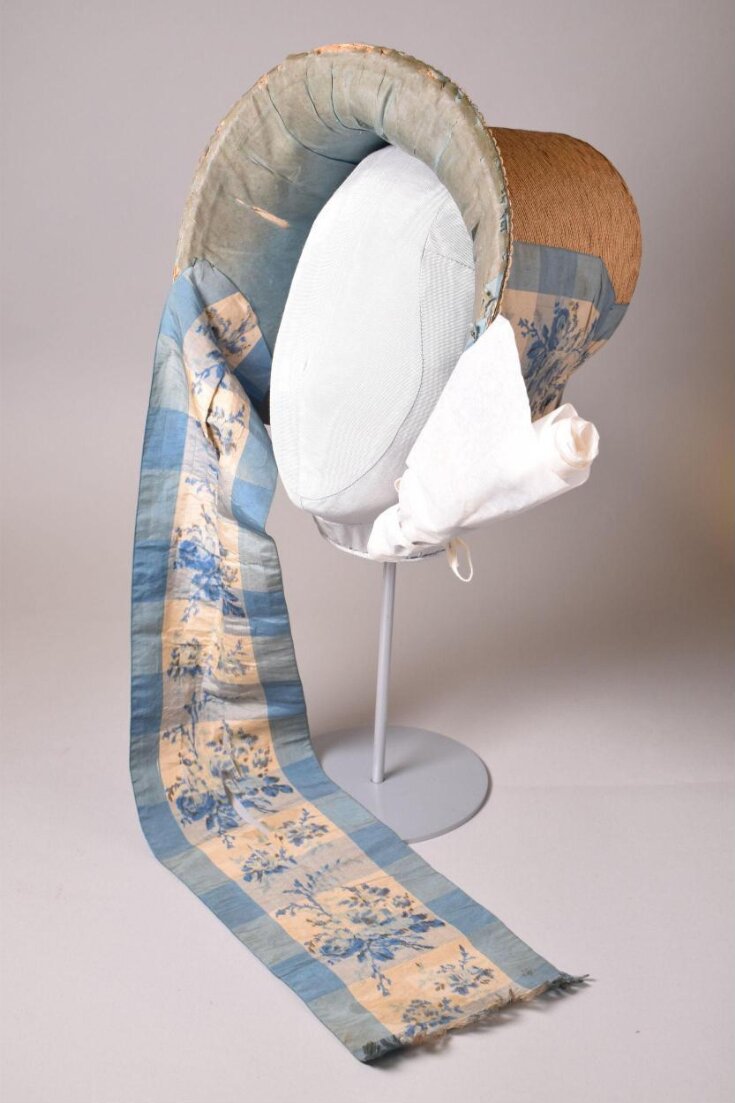 |
| Straw Bonnet, 19th century, VAM. |
I selected this straw bonnet for the lovely figured ribbon. I wish they had more photographs to I could see the brim construction and neck edge better...
